
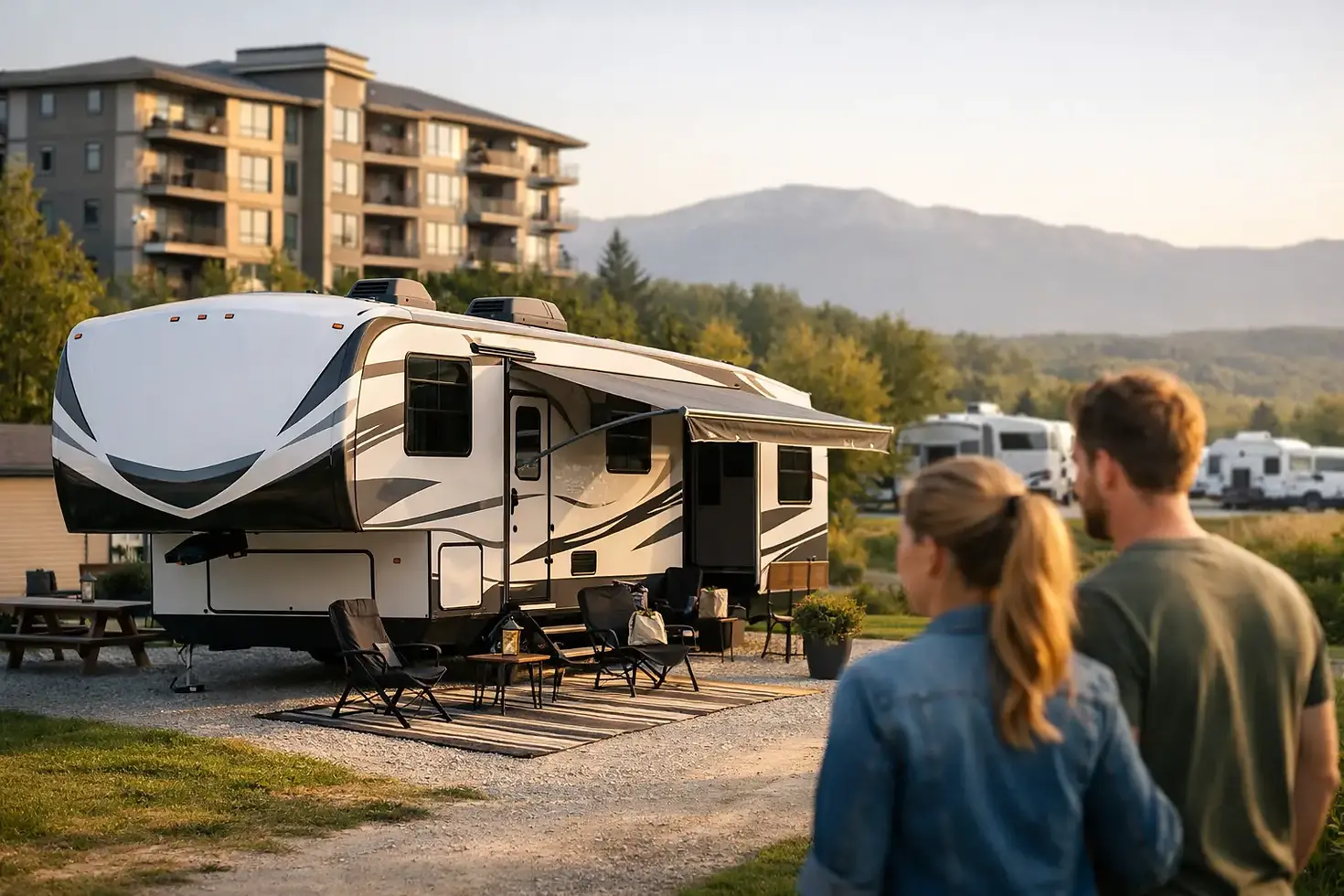
RV Housing: A Practical Alternative to Apartments

An apartment can offer a familiar address, but it can also come with a fixed lease, shared walls, limited outdoor space, and rent that leaves little room for the rest of life. For people who already own an RV or tiny home, RV housing can be a practical residential option: a monthly site, a self-contained home, and the freedom to keep life simpler without treating every move like a vacation.
That freedom works best when it is paired with a realistic plan. Long-term RV living is not the same as camping, and a monthly RV park is not simply an overnight stop with a longer reservation. It is a shared residential setting where site condition, utility needs, pets, parking, and neighborly habits all matter.
What Long-Term RV Housing Actually Provides
RV housing is a place to live in an RV or qualifying tiny home for an extended period, typically through monthly site rental rather than a nightly rate. Residents bring their own home on wheels and rent the space, access, and available hookups or services provided by the park.
For many residents, the appeal is straightforward. They may already own their rig, want to avoid furnishing a conventional apartment, need a base while working in the area, or prefer a smaller footprint after downsizing. Retirees, mobile professionals, couples, and people between major life changes can all find that a stable monthly site fits better than a traditional lease.
The arrangement is different from an apartment in useful ways. You are responsible for your own home’s upkeep, storage is more limited, and the park may have clear requirements for the age, appearance, and condition of an RV. In return, you may have more independence, a smaller living space to maintain, and a housing arrangement that better suits a mobile lifestyle.
Why Location Matters More Than Resort Amenities
For a long-term resident, the best RV park is not necessarily the one with the largest recreation room or the longest list of vacation amenities. It is the one that makes ordinary life easier.
A well-located park can put groceries, restaurants, pharmacies, services, and daily errands within a short drive or walk. Easy access to I-5 matters for commuters, visiting family, medical appointments, and day trips. In Vancouver, a location near everyday conveniences also makes it easier to enjoy the area without spending every free day planning around traffic or long drives.
This is where long-term RV housing becomes less about “getting away” and more about putting down roots in a way that still leaves room to move when the time is right. You can know your local coffee shop, find a favorite river walk, and keep Portland-area attractions within reach, while still living in a home designed for mobility.
Compare the Full Monthly Cost, Not Just the Site Rent
Monthly site rent is usually the first number people notice, and it should be. At Piper RV Park, monthly sites start at $860, providing a clear point of comparison for RV owners considering local housing choices. But a useful budget looks beyond the advertised starting rate.
Your actual monthly housing cost may include the site, electricity or other utilities depending on the agreement, RV insurance, vehicle fuel, maintenance, propane, laundry, internet, and any financing payment on the RV itself. An apartment has its own add-ons, of course: renters insurance, parking, utilities, deposits, pet charges, moving costs, and sometimes fees that are easy to miss until the lease is in front of you.
The right comparison is personal. Someone with a paid-off, well-maintained RV may see a significant difference between a monthly site and an apartment. Someone buying a newer RV specifically to live in should include the purchase price, loan terms, depreciation, and repair reserve in the calculation. RV housing can be more affordable, but it is not automatically cheaper in every situation.
A sensible approach is to build a 12-month budget before committing. Include a maintenance fund, because tires, seals, batteries, appliances, and plumbing repairs do not wait for a convenient month. A monthly site can create predictable housing, but the RV remains your home and your responsibility.
Make Sure Your RV Is Ready for Residential Use
Weekend-ready and full-time-ready are not always the same thing. Before moving into a long-term site, take an honest look at how your RV handles everyday living.
Start with the basics: roof seals, windows, plumbing, electrical systems, leveling equipment, heating, cooling, and holding tanks. Water damage deserves particular attention. A small leak that feels manageable during an occasional camping trip can become a major problem when the rig is occupied every day through changing seasons.
Think about interior function as well. Is there enough closet space for work clothes and weather changes? Is your kitchen workable for regular meals? Can you sit comfortably during a rainy weekend? If two people will be living in the RV, is there a practical way to share the space without turning every routine into a negotiation?
For tiny-home owners, compatibility matters just as much. Confirm the park’s requirements before making plans, including dimensions, condition, self-contained systems, and how the home will be transported or placed. A direct conversation before arrival prevents frustrating surprises later.
A Good Community Depends on Shared Standards
Long-term RV parks work well when residents view them as communities rather than parking lots. People are living close together, often for months at a time. Clean sites, quiet consideration, safe driving, and respectful use of shared spaces make a real difference to everyone’s comfort.
Park rules are not a drawback when they are clear and reasonably enforced. They protect the practical things residents care about: an orderly appearance, safe access, appropriate parking, and a setting where people can relax at home. Ask about site expectations before you reserve, especially if you have outdoor furniture, work equipment, extra vehicles, or visitors who may come regularly.
Pet policies deserve the same attention. Pet-friendly does not mean every pet is automatically approved or that basic responsibilities disappear. Long-term residents should expect to keep pets leashed where required, clean up promptly, prevent excessive barking, and make sure their animal is a good fit for a close-knit residential environment. Approval requirements help keep the community comfortable for pet owners and non-pet owners alike.
Know Whether You Need Flexibility or Stability
One of the biggest advantages of RV living is flexibility, but there are different kinds of flexibility. Some people need a short stop while passing through. Others need a dependable home base for a season, a work assignment, or a longer transition. Those are different housing needs and should be matched to different types of parks.
A monthly residential community is built for the second group. It suits people who want a stable place to receive mail, maintain a routine, commute, and get to know the area. A 30-day minimum stay also helps establish a more settled atmosphere than a park designed around constant overnight turnover.
Before choosing a site, ask yourself how long you realistically expect to stay. If your schedule is uncertain, understand the notice requirements and availability process. If you expect to remain for many months, consider how the neighborhood, commute, weather, and local services will feel after the first week rather than only on move-in day.
Questions Worth Asking Before You Reserve
A straightforward conversation with the park office can tell you more than a polished photo ever will. Ask whether your RV or tiny home meets the property’s requirements, what the monthly rate includes, how utilities are handled, and whether the site can accommodate your specific length and setup.
You should also ask about the minimum stay, pet approval, vehicle parking, laundry access if needed, mail arrangements, quiet hours, and the process for extending your stay. If you work remotely, verify your internet options rather than assuming. If you rely on a particular medical provider, school, employer, or transit route, test the travel time at the hours you will actually use it.
The goal is not to find a place with no rules or no trade-offs. It is to find a place where the expectations fit the way you live.
RV housing asks you to own less space but take more direct responsibility for it. For many people, that is exactly the appeal. With a well-kept RV, a realistic budget, and a monthly community that values clean, respectful living, a site can become more than a place to park. It can be a comfortable base for the next part of your life.


Comments